Andrzej Indrzejczak
| prof. dr hab. Andrzej Indrzejczak | 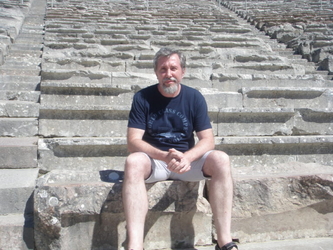 |
| kierownik Katedry Logiki i Metodologii Nauk | |
| Instytut Filozofii | |
| Uniwersytet Łódzki | |
| ul. Lindleya 3/5 | |
| 91-131 Łódź | |
| pokój 321 | |
| ☎ (+42) 635-61-31 | |
| ✉ andrzej.indrzejczak@filhist.uni.lodz.pl |
Curriculum vitae
Wykształcenie
- 1989: magister kulturoznawstwa (Wydział Filologiczny Uniwersytetu Łódzkiego)
- 1993: magister filozofii (Wydział Filozoficzno-Historyczny Uniwersytetu Łódzkiego)
- 1997: doktor nauk humanistycznych w zakresie filozofii (Wydział Filozoficzno-Historyczny Uniwersytetu Łódzkiego)
tytuł rozprawy doktorskiej: Sekwentowe i założeniowe formalizacje zdaniowych logik modalnych - 2007: doktor habilitowany nauk humanistycznych w zakresie filozofii (Wydział Filozoficzno-Historyczny Uniwersytetu Łódzkiego)
tytuł rozprawy habilitacyjnej: Hybrydowe systemy dedukcyjne w logikach modalnych - 2015: profesor nauk humanistycznych
Doświadczenie zawodowe
- 1992—1997: asystent w Katedrze Logiki i Metodologii Nauk Uniwersytetu Łódzkiego
- 1997—2007: adiunkt w Katedrze Logiki i Metodologii Nauk Uniwersytetu Łódzkiego
- 2007—2017: profesor nadzwyczajny Uniwersytetu Łódzkiego
- 2017—dziś: profesor zwyczajny Uniwersytetu Łódzkiego
- 1999—2007: adiunkt w Katedrze Filozofii Wyższej Szkoły Humanistyczno-Ekonomicznej w Łodzi
- 2007—2014: profesor nadzwyczajny Wyższej Szkoły Humanistyczno-Ekonomicznej (później: Akademii Humanisyczno-Ekonomicznej) w Łodzi
- 2003—2014: koordynator zajęć z logiki w Polskim Uniwersytecie Wirtualnym
- 2007—2014: kierownik Zakładu Metodologii Ogólnej Uniwersytetu Łódzkiego
- 2015—dziś: kierownik Katedry Logiki i Metodologii Nauk Uniwersytetu Łódzkiego
Prowadzone zajęcia
- kursowe m.in.: z logiki, filozofii, podstaw informatyki
- zaawansowane: Logika II (wstęp do logik nieklasycznych), seminaria z logiki filozoficznej, Metodologia nauk humanistycznych (kursy dla doktorantów)
- wykłady monograficzne (m.in. Teoria dowodu, Możliwe światy – wstęp do logik modalnych, Logika i czas – wstęp do logik temporalnych, Rozumowanie, argumentacja, dowód, Metalogika)
Zainteresowania
Naukowe
- Teoria dowodu dla logik nieklasycznych, zwłaszcza praktyczne zastosowania metod dowodzenia i ich kombinacje (systemy hybrydowe), naturalne metody szukania dowodu, algorytmy i heurystyka
- Metodologia rachunków sekwentowych: metody dowodzenia eliminacji cięcia, poszerzenia na logiki nieklasyczne, antyrealistyczne podejście do problemu znaczenia stałych logicznych
- Zastosowania logik nieklasycznych w formalnej analizie tradycyjnych problemów filozoficznych, np. analiza czasu w logikach temporalnych
- Teoria rozumowań i argumentacji, klasyfikacja argumentów, toposów i forteli erystycznych, logiczne problemy z oceną argumentacji (poprawność a rzetelność itp.)
- Metodologia nauk społecznych, zwłaszcza problematyka interpretacji tekstów, analizy różnych podejść do naukowych podstaw humanistyki, logiczne podstawy typologii
Inne
- Muzyka: cieszy mnie rozmaita, ale najbardziej jazz i rock lat 70. (np. Miles Davis, Jimi Hendrix, Weather Report, Chick Corea, Herbie Hancock, Pat Metheny, Carlos Santana, King Crimson)
- Film: dla mnie najlepsze jest włoskie kino, zwłaszcza Federico Fellini, Michelangelo Antonioni, Pier Paolo Pasolini. Ale najlepszy film to Mechaniczna Pomarańcza Stanleya Kubricka
- Literatura: kilka dobrych nazwisk: Kurt Vonnegut, Philip K. Dick, Ryszard Kapuściński, Stanisław Lem, Jaroslav Hašek, Stephen King
- Historia starożytnej Grecji, Rzymu i wczesnego średniowiecza — książki Aleksandra Krawczuka to ciągle najlepszy sposób wejścia w temat
Publikacje
Monografie
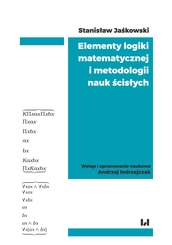
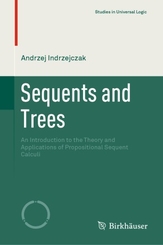
| 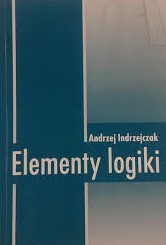 |
| 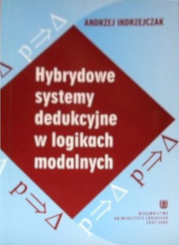 |
|  |
|  |
|  |
|  |
|  |
|  |
Artykuły w czasopismach i monografiach
- Natural Deduction in Quantifier Modal Logic, Bulletin of the Section of Logic, 23(1):30—40, 1994.
- Natural Deduction for Tense Logics, Bulletin of the Section of Logic, 23(4):173—179, 1994.
- A Note Concerning Belief Logic, Bulletin of the Section of Logic, 24(3):169—173, 1995.
- Dedukcja naturalna w logikach modalnych pierwszego rzędu, w: J. Perzanowski, A. Pietruszczak, C. Gorzka (red.), Filozofia logiczna 1994. Materiały I Polskich Warsztatów Logiczno-Filozoficznych, Szklarska Poręba, 25-29 kwietnia 1994 roku, Toruń: Wydawnictwo Uniwersytetu Mikołaja Kopernika, 1995, 289—302.
- Cut-free Sequent Calculus for S5, Bulletin of the Section of Logic, 25(2):95—102, 1996.
- Generalised Sequent Calculus for Propositional Modal Logics, Logica Trianguli, 1:15—31, 1997.
- Cut-free Sequent Calculus for S5 (abstract), Bulletin of Symbolic Logic, 3(2), 1997.
- Jaśkowski and Gentzen approaches to Natural Deduction and related systems, w: K. Kijania-Placek, J. Woleński (red.), The Lvov-Warsaw School and Contemporary Philosophy, Dordrecht: Kluver Academic Publishers, 1998, 253—264.
- Cut-free Double Sequent Calculus for S5, Logic Journal of the IGPL, 6(3):505—516, 1998.
- A Survey of Natural Deduction Systems for Modal Logics, Logica Trianguli, 3:55—83, 1999.
- Zagadnienie modalności w logice, Zeszyty Naukowe Wyższej Szkoły Humanistyczno-Ekonomicznej w Łodzi, Logika i filozofia, pod red. R. Kleszcza, 2(7):7—24, 2000.
- Multiple Sequent Calculus for Tense Logics, International Conference on Temporal Logic, Leipzig: University of Leipzig, 2000, 93—104.
- Labelled Analytic Tableaux for S4.3, Bulletin of the Section of Logic, 31(1):15—26, 2002.
- Resolution-based Natural Deduction, Bulletin of the Section of Logic, 31(3):159—170, 2002.
- Hybrid System for (not only) Hybrid Logic, w: P. Balbiani, N.-Y. Suzuki, F. Wolter, M. Zakharyaschev (red.), Advances in Modal Logic 4, London: College Publications, 2002, 132—152.
- Labelled Natural Deduction System for Linear Temporal Logic, Studia Logica, 75(3):345—376, 2003.
- Analityczna procedura dowodzenia twierdzeń w logikach linearnych, w: J. Malinowski, A. Pietruszczak (red.), Wokół filozofii logicznej, Toruń: Wydawnictwo Uniwersytetu Mikołaja Kopernika, 2004, 35—54.
- Rachunek sekwentów Gentzena w automatycznej ewaluacji testów egzaminacyjnych (współautor: Adam Niewiadomski), Zeszyty Naukowe Wyższej Szkoły Humanistyczno-Ekonomicznej w Łodzi, Zarządzanie informacją, pod red. A Cadera i K. Przybyszewskiego, 5(47):51—58, 2004.
- Wielosekwentowa formalizacja logik temporalnych, w: Janusz Kaczmarek, Ryszard Kleszcz (red.), Wokół logiki i filozofii, Łódź: Wydawnictwo Uniwersytetu Łódzkiego, 2005, 45—61.
- Sequent Calculi for Monotonic Modal Logic, Bulletin of the Section of Logic, 34(3):151—164, 2005.
- Modal Hybrid Logic, Logic and Logical Philosophy, 16(2/3):147—257, 2007.
- Labelled Tableau Calculi for Weak Modal Logics, Bulletin of the Section of Logic, 36(3/4):159—173, 2007.
- Correspondence Theory in Proof Theory, Bulletin of the Section of Logic, 37(3/4): 171—183, 2008.
- Suszko's Contribution to the Theory of Nonaxiomatic Proof Systems, Bulletin of the Section of Logic, 38(3/4):151—161, 2009.
- Uwagi o klasyfikacji rozumowań, w: Ryszard Kleszcz (red.), Widnokrąg analityczny, Łódź: Wydawnictwo Uniwersytetu Łódzkiego, 2009, 147—160.
- The Gentzen Sequent Calculus in E-Testing. Part I: Foundations (współautor: Adam Niewiadomski), Journal of Applied Computer Science, 18(1):39—48, 2010.
- The Gentzen Sequent Calculus in E-Testing. Part II: Algorithms and Implementation (współautor: Adam Niewiadomski), Journal of Applied Computer Science, 18(2):57—66, 2010.
- Admissibility of Cut in Congruent Modal Logics, Logic and Logical Philosophy, 20(3):189—203,2011.
- Possible Worlds in Use, Studia Logica, 99: 229—248, 2011.
- Cut-free Hypersequent Calculus for S4.3, Bulletin of the Section of Logic, 41(1/2):89—104, 2012.
- Decision Procedures for some Strong Hybrid Logics (współautor: Michał Zawidzki), Logic and Logical Philosophy, 22(4):389—409, 2013.
- Powstanie i ewolucja dedukcji naturalnej, Filozofia Nauki, 22(2):5—20, 2014.
- Contraction Contracted, Bulletin of the Section of Logic, 43(3/4):139—153, 2014.
- A Survey of Nonstandard Sequent Calculi, Studia Logica, 102(6):1295—1322, 2014.
- Powstanie i ewolucja Rachunków Sekwentowych, Filozofia Nauki, 22(4): 53—70, 2014.
- Eliminability of Cut in Hypersequent Calculi for some Modal Logics of Linear Frames, Information Processing Letters, 115(2):75—81, 2015.
- Natural Deduction, hasło w: Internet Encyclopedia of Philosophy, pod red. J.-Y. Béziau, 2015 http://www.iep.utm.edu/nat-ded/.
- Hypersequent Calculi for S5 — The Methods of Cut Elimination (współautor: Kaja Bednarska), Logic and Logical Philosophy, 24(3):277—311, 2015.
- Linear Time in Hypersequent Framework, Bulletin of Symbolic Logic, 22(1):121—144, 2016.
- Uwagi o formach kontrargumentacji (współautor: Beata Promińska), w: Janusz Maciaszek, Ryszard Kleszcz (red.), Argumentacja, myślenie, działanie, Łódź: Wydawnictwo Uniwersytetu Łódzkiego, 2016, 27—40.
- Simple Cut Elimination Proof for Hybrid Logic, Logic and Logical Philosophy, 25(2):129—141, 2016.
- Simple Decision Procedure for S5 in Standard Cut-free Sequent Calculus, Bulletin of the Section of Logic, 45(2):125—140, 2016.
- Tautology Elimination, Cut Elimination and S5, Logic and Logical Philosophy, 26(4):461—471, 2017.
- Cut Elimination Theorem for Non-Commutative Hypersequent Calculus, Bulletin of the Section of Logic, 46(1/2):133—147, 2017.
- Stanisław Jaśkowski: Life and Work, w: Á. Garrido, U. Wybraniec-Skardowska (red.), The Lvov-Warsaw School. Past and Present, Basel: Birkhauser 2018, 457—464.
- Stanisław Jaśkowski and Natural Deduction Systems, w: Á. Garrido & U. Wybraniec-Skardowska (red.), The Lvov-Warsaw School. Past and Present, Basel: Birkhauser 2018, 465—484.
- Cut-free Modal Theory of Definite Descriptions, w: G. Bezhanishvili, G. D'Agostino, G. Metcalfe, T. Studer (red.), Advances in Modal Logic 12, London: College Publications, 2018, 387—406.
- Rule-Generation Theorem and its Applications, Bulletin of the Section of Logic, 47(4):265—281, 2018.
- Fregean Description Theory in Proof-Theoretical Setting, Logic and Logical Philosophy, 28(1):137—155, 2019.
- Two is Enough - Bisequent Calculus for S5, w: A. Herzig & A. Popescu (red.), Frontiers of Combining Systems. 12th International Symposium, FroCoS 2019, London, UK, September 4-6, 2019, Proceedings, Cham: Springer Nature, 2019, 277—294.
- Cut Elimination in Hypersequent Calculus for Some Logics of Linear Time, Review of Symbolic Logic, 12(4):806—822, 2019.
- Existence, Definedness and Definite Descriptions in Hybrid Modal Logic, w: Nicola Olivetti, Rineke Verbrugge, Sara Negri, Gabriel Sandu (red.), Advances in Modal Logic 13, London: College Publications, 2020, 349—368.
- Free Definite Description Theory - Sequent Calculi and Cut Elimination, Logic and Logical Philosophy, 29(4):505—539, 2020.
- O rozumieniu analityczności w teorii dowodu, w: Janusz Maciaszek (red.), Analiza, racjonalność, filozofia religii. Księga jubileuszowa dedykowana Profesorowi Ryszardowi Kleszczowi, Łódź: Wydawnictwo Uniwersytetu Łódzkiego, 2020, 13—35.
- Free Logics Are Cut-Free, Studia Logica, 109(4): 859—886, 2021.
- A Novel Approach to Equality, Synthese, 199(1—2): 4749—4774, 2021.
- Tableaux for Free Logics with Descriptions (współautor: Michał Zawidzki), w: Anupam Das, Sara Negri (red.), Automated Reasoning with Analytic Tableaux and Related Methods, Cham: Springer, 2021, 56—73.
- Axioms, Hypotheses and Rules. Methodological Considerations, w: Dorota Leszczyńska-Jasion, Paweł Łupkowski, Andrzej Gajda, Szymon Chlebowski (red.), Język, logika, matematyka. Tom dedykowany Jerzemu Pogonowskiemu w siedemdziesięcioletnią rocznicę urodzin, Poznań: Wydawnictwo Uniwersytetu Adama Mickiewicza, 2021, 77—96.
- Russellian Definite Description Theory — A Proof-theoretic Approach, The Review of Symbolic Logic, First View, 2021.
- Leśniewski's Ontology — Proof-theoretic Characterization, w: Jasmin Blanchette, Laura Kovács, Dirk Pattinson (red.), Automated Reasoning. 11th International Joint Conference, IJCAR 2022, Cham: Springer, 2022, 541—558.
- Dialogues and Proofs; Yankov’s Contribution to Proof Theory, w: Alex Citkin, Ioannis M. Vandoulakis (red.), Yankov on Non-Classical Logics, History and Philosophy of Mathematics, Outstanding Contributions to Logic, vol. 24, Cham: Springer, 2022, 53—70.
- When Iota Meets Lambda (współautor: Michał Zawidzki), Synthese, 201: artykuł nr 71, 2023.
- Bisequent Calculus for Four-Valued Quasi-Relevant Logics: Cut Elimination and Interpolation, Journal of Automated Reasoning 67, artykuł nr 37, 2023
- Russellian definite description theory - a proof theoretic approach, Review of Symbolic Logic 16(2), 2023, 624—649.
- Definite Descriptions and Hybrid Tense Logic (współautor: Michał Zawidzki), Synthese, 202: artykuł nr 98, 2023
- A Cut-Free, Sound and Complete Russellian Theory of Definite Descriptions (współautor: Nils Kürbis), w: Revantha Ramanayake, Josef Urban (red.), Automated Reasoning with Analytic Tableaux and Related Methods, Cham: Springer, 2023, 112—130.
- Towards Proof-Theoretic Formulation of the General Theory of Term-Forming Operators, w: Revantha Ramanayake, Josef Urban (red.), Automated Reasoning with Analytic Tableaux and Related Methods, Cham: Springer, 2023, 131—149.
- A Uniform Formalisation of Three-Valued Logics in Bisequent Calculus (współautor: Yaroslav Petrukhin), in: Brigitte Pientka, Cesare Tinelli (red.), Automated Deduction – CADE 29, Cham: Springer 2023, 325—343.
- Gentzen i sekwenty temporalne, w: Dariusz Surowik, Roman Matuszewski, Andrzej Malec (red.), Logika, informatyka, filozofia nauki. W darze Profesorowi Kazimierzowi Trzęsickiemu, Białystok: Uniwersytet w Białymstoku, 161—180.
- SCI–Sequent Calculi, Cut Elimination and Interpolation Property, w: Jacek Malinowski, Rafał Palczewski (red.), Janusz Czelakowski on Logical Consequence, Outstanding Contributions to Logic, vol. 27, Cham: Springer, 2024, 323—343.
- The Logicality of Equality, w: Thomas Piecha, Kai F. Wehmeier (red.), Peter Schroeder-Heister on Proof-Theoretic Semantics, Outstanding Contributions to Logic, vol. 29, Cham: Springer, 2024, 211—238.
- Gentzen and Temporal Sequents, Studies in Logic, Grammar and Rhetoric, 69(1):241—258, 2024.
- The Problem of Natural Representation of Reasoning in the Lvov-Warsaw School, History and Philosophy of Logic, 45(2):142—160, 2024.
- Uniform Cut-Free Bisequent Calculi for Three-Valued Logics (współautor: Yaroslav Petrukhin), Logic and Logical Philosophy, 33(3):463—506, 2024.
- Bisequent Calculi for Neutral Free Logic with Definite Descriptions (współautor: Yaroslav Petrukhin) [in:] C. Benzmüller, J. Otten, R. Ramanayake (red.), Proceedings of the 5th International Workshop on Automated Reasoning in Quantified Non-Classical Logics (ARQNL 2024), CEUR Workshop Proceedings, vol. 3875, 2024, 48—61.
- When Epsilon meets Lambda: Extended Leśniewski's Ontology [in:] C. Benzmüller, J. Otten, R. Ramanayake (red.), Proceedings of the 5th International Workshop on Automated Reasoning in Quantified Non-Classical Logics (ARQNL 2024), CEUR Workshop Proceedings, vol. 3875, 2024, 62—79.
Redakcja numerów specjalnych czasopism
- Special issue of Studia Logica, Gentzen's and Jaśkowski's Heritage. 80 Years of Natural Deduction and Sequent Calculi, 102(6), 2014, ss. 1091—1322.
- Special issue of Bulletin of the Section of Logic, Grzegorz Malinowski in Honorem 1, 46(1/2), 2017, ss. 1—150 (współredaktor: Janusz Ciuciura).
- Special issue of Bulletin of the Section of Logic, Grzegorz Malinowski in Honorem 2, 46(3/4), 2017, ss. 151—291 (współredaktor: Janusz Ciuciura).
- Proceedings of the 10th International Conference on Non-Classical Logics. Theory and Applications, Łódź, Poland, 14-18 March 2022, Electronic Proceedings in Theoretical Computer Science, <358, 2022, ss. 309 (współredaktor: Michał Zawidzki).
- Proceedings of the 11th International Conference on Non-Classical Logics. Theory and Applications, Łódź, Poland, 5-8 September 2024, Electronic Proceedings in Theoretical Computer Science, 415, 2024, pp. 270 (współredaktor: Michał Zawidzki).
Rozszerzone abstrakty konferencyjne
- On the Classification of Natural Deduction Calculi, Proceedings of XXIII World Congress of Philosophy, August 4—10, 2013, Athens 2013, ss. 8.
- Cut-free Hypersequent Calculus for the Basic Temporal Logic of Linear Frames, Short Papers of Advances in Modal Logic 10, Groningen, August 5—8, 2014, Groningen, 2014, 29—33.
- Multiset Union in Sequent Calculi, Short Papers of Trends in Logic XIII, Łódź, July, 2—5, 2014, Łódź 2014, 7—9.
- Hypothetical Reasoning in the setting of Sequent Calculi, Beyond Logic. Proceedings of the Conference held in Cerisy-la-Salle, May 22—27, 2017, pod red. J. Fichota i T. Piechy, Tybinga: Uniwersytet w Tybindze, 2017, 413—429.
Podręczniki internetowe
- Wstęp do logiki. Materiały do nauczania logiki przez Internet, Warszawa: Polski Uniwersytet Wirtualny, 2003.
- Logika i argumentacja. Materiały do nauczania logiki przez Internet, Warszawa: Polski Uniwersytet Wirtualny, 2005.
- Logika i semiotyka. Materiały do nauczania logiki przez Internet, Warszawa: Polski Uniwersytet Wirtualny, 2006.
- Zadania z logiki formalnej, Warszawa: Polski Uniwersytet Wirtualny, 2008
- Zadania z logiki i semiotyki, Warszawa: Polski Uniwersytet Wirtualny, 2008
Inne
- Kino drugiego stopnia, Iluzjon, 36:14—20, 1989.
- Sprawozdanie z konferencji "Logic Colloquium '96, San Sebastian", Ruch Filozoficzny, LIV(1):192—193, 1997.
- Recenzja książki H. Wansinga "Displaying Modal Logic", Zeszyty Naukowe Wyższej Szkoły Humanistyczno-Ekonomicznej w Łodzi, Logika i filozofia, pod red. R. Kleszcza, 2(7):113—115, 2000.
- Konferencja "Logiki Nieklasyczne — teoria i zastosowania" (próba podsumowania), Ruch Filozoficzny, LXVI(2):335—340, 2009.
Wybrane wystąpienia konferencyjne
- 2014, 5—10 maja, konferencja: Zastosowania Logiki w Filozofii i Podstawach Matematyki XIX, Szklarska Poręba, referat: Contraction Contracted
- 2014, 2—5 lipca, konferencja: Trends in Logic XIII, Łódź, referat: Multiset Union in Sequent Calculi
- 2014, 5—8 sierpnia, konferencja: Advances in Modal Logic 10, Groningen, Holandia, referat: Cut-free Hypersequent Calculus for the Basic Temporal Logic of Linear Frames
- 2014, 23—24 sierpnia, konferencja: Hypothetical Reasoning, Tybinga, Niemcy, zaproszony wykład: Hypersequents and Linear Time
- 2014, 21—22 października, konferencja: LX Konferencja Historii Logiki, Kraków, referat: 80 lat dedukcji naturalnej
- 2015, 4—8 maja, konferencja: Zastosowania Logiki w Filozofii i Podstawach Matematyki XX, Szklarska Poręba, referat: A Survey of Hypersequent Calculi for S5 (wspólnie z Kają Bednarską)
- 2015, 20—30 czerwca, konferencja: 5th World Congress and School on Universal Logic, Stambuł, Turcja, 3 godzinne zaproszone wykłady: Cut Elimination Theorem:
1. Sequent Calculi and Cut Rule
2. Methods and Strategies of Cut Elimination
3. Consequences, Applications, Extensions and Limitations of Cut Elimination - 2015, 15—19 września, konferencja: X Polski Zjazd Filozoficzny, Poznań, referat: Hipersekwentowa formalizacja logik czasu liniowego
- 2015, 24—25 września, konferencja: Logiki Nieklasyczne. Teoria i Zastosowania VII, Toruń, referat: Cut Elimination Theorem for Hybrid Logics
- 2016, 4—8 maja, konferencja: Zastosowania Logiki w Filozofii i Podstawach Matematyki XXI, Szklarska Poręba, referat: Tautology Elimination Rule
- 2016, 5—7 września, konferencja: Logiki Nieklasyczne. Teoria i Zastosowania VIII, Łódź, 2 referaty:
1. Tautology Elimination Theorem for Fitting's Formalization of S5
2. Cut Elimination in Noncommutative Hypersequent Calculus for Temporal Logics - 2016, 24—26 października, konferencja: LXII Konferencja Historii Logiki, Kraków, referat: Wykłady Jaśkowskiego. Pierwszy podręcznik dedukcji naturalnej
- 2017, 4 lutego, Sesja dedykowana Profesor Ewie Orłowskiej z okazji 60-lecia pracy naukowej, zaproszony wykład: Ujęcie identyczności w systemach tablic dualnych
- 2017, 8—12 maja, konferencja: Zastosowania Logiki w Filozofii i Podstawach Matematyki XXII, Szklarska Poręba, referat: Elimination of Cut in Non-commutative Hypersequent Calculus for Temporal Logic
- 2017, 22—27 maja, konferencja: Beyond Logic, Cerisy-la-Salle, Francja, zaproszony wykład: Hypothetical Reasoning in the Setting of Sequent Calculi
- 2017, 10—11 listopada, konferencja: Research Workshop on Hybrid Intensional Logic, Salamanca, Hiszpania, zaproszony wykład: Cut Elimination Theorem for Hybrid Modal Logics
- 2018, 20 stycznia, Sesja organizowana przez Polskie Towarzystwo Logiki i Filozofii Nauki, zaproszony wykład: Sekwentowe podejście do modalnej teorii deskrypcji
- 2018, 7—11 maja, konferencja: Zastosowania Logiki w Filozofii i Podstawach Matematyki XXIII, Szklarska Poręba, 2-częściowy zaproszony wykład: Definite Descriptions and Proof Theory:
Część 1: Russel's and Fregean theories of Definite Descriptions
Część 2: Sequent Calculus and Cut Elimination - 2018, 16—20 czerwca, konferencja: 6th Universal Logic School, Vichy, Francja, 3-częściowy zaproszony wykład: Definite Descriptions in the Proof-theoretic Setting:
Część 1: A Survey of the Basic Approaches to Definite Descriptions
Część 2: Proof-Theoretic Toolkit
Część 3: Modal Theories of Definite Descriptions - 2018, 21—26 czerwca, konferencja: 6th World Congress on Universal Logic, Vichy, Francja, referat: Stanisław Jaśkowski and the First Textbook based on Natural Deduction
- 2018, 30 czerwca—2 lipca, konferencja: Zlot Filozoficzny 2018, Łódź, Poland, zaproszony wykład: Beyond Logic — Recent Directions in Proof Theory
- 2018, 27—31 sierpnia, konferencja: Advances in Modal Logic, Berno, Szwajcaria, referat: Cut-free Modal Theory of Definite Descriptions
- 2018, 24—25 września, konferencja: Logiki Nieklasyczne. Teoria i Zastosowania IX, Toruń, zaproszony wykład: Stanisław Jaśkowski and Natural Deduction
- 2019, 14 stycznia, wydarzenie: I Światowy Dzień Logiki, Łódź, referat: Kurt Gödel, życie i logika
- 2019, 19 lutego, wydarzenie: Seminarium w Institute of Advanced Studies, Londyn, Wielka Brytania, wykład: How to provide a decent proof system for definite descriptions
- 2019, 27—30 marca, konferencja: Proof-theoretic Semantics: Assesment and Future Perspectives III, Tübingen, Germany, zaproszony wykład: Proof-theoretic Approach to Definite Descriptions
- 2019, 6—7 kwietnia, konferencja: A gdzie logika?, Łódź, zaproszony wykład: Logika w Nauce
- 2019, 13—17 maja, konferencja: Zastosowania Logiki w Filozofii i Podstawach-Matematyki XXIV, Szklarska Poręba, referat: Completing the Circle - Cut Admissibility for Carnielli-style n-Sequent Calculus.
- 2019, 19—21 czerwca, konferencja: Smirnov Readings in Logic XI, Moskwa, Rosja, zaproszony wykład: Cut-free Sequent Calculi for Some Theories of Definite Descriptions.
- 2019, 11—15 sierpnia, konferencja: Logic Colloquium, Praga, Czechy, referat: Admissibility of Cut for Sequent Calculus Related to n-labelled Tableaux.
- 2019, 3—6 września, konferencja: Frontiers of Combining Systems (FroCoS), Londyn, Wielka Brytania, referat: Two is enough - bisequent calculus for S5.
- 2019, 9—14 września, konferencja: XI Polski Zjazd Filozoficzny, Lublin, panel dyskusyjny: Inspiracje do tworzenia nowych systemów logicznych, referat: Rachunki bisekwentowe w zastosowaniu do logik nieklasycznych.
- 2020, 9—15 marca, konferencja: Applications of Algebra in Logic and Comuter Science XXIV, Zakopane, 2-częsciowy zaproszony wykład: Logicality of Equality; Proof-Theoretic Considerations.
- 2020, 24—28 sierpnia, konferencja: Advances in Modal Logic, Helsinki, Finlandia (online), referat: Existence, Definedness and Definite Descriptions in Hybrid Modal Logic
- 2020, 3—4 listopada, konferencja: LXVI Konferencja Historii Logiki, Kraków (online), referat: Ontologia Leśniewskiego w teoriodowodowym ujęciu
- 2020, 11—13 listopada, konferencja: XI Łódzkie Warsztaty Filozoficzne, Łódź (online), zaproszony wykład: «Nieskończoność unieskończoniona» Georga Cantora (1845-1918)
- 2021, 24—26 czerwca, konferencja: Smirnov Readings in Logic XII, Moskwa, Rosja (online), zaproszony wykład: Leśniewski's Ontology — Proof-Theoretic Characterization
- 2021, 24—26 czerwca, konferencja: Smirnov Readings in Logic XII, Moskwa, Rosja (online), referat: On the application of bisequents to many-valued logics (współautor: Yaroslav Petrukhin)
- 2021, 2—3 lipca, konferencja: 1st Łódź-Bochum Workshop, Łódź, Bochum, Niemcy (online), referat: When iota meets lambda
- 2021, 6—9 września, konferencja: International Conference on Automated Reasoning with Analytic Tableaux and Related Methods, Birmingham, Wielka Brytania (online), referat: Tableaux for Free Logics with Descriptions. (współautor: Michał Zawidzki)
- 2021, 3—4 listopada, konferencja: LXVII Konferencja Historii Logiki, Kraków (online), referat: Three-valued logics in bisequent framework (współautor: Yaroslav Petrukhin)
- 2022, 1—11 kwietnia, konferencja: 7th World Congress and School on Universal Logic, Kreta, Grecja, 3-częściowy tutorial: Equality. Proof-Theoretic Considerations
- 2022, 1—11 kwietnia, konferencja: 7th World Congress and School on Universal Logic, Kreta, Grecja, zaproszony wykład: Hybrid Logic and Applications": A Survey of Proof Systems for Hybrid Logics
- 2022, 22—23 lipca, konferencja: 2nd Workshop on Relating Logic, Cagliari, Włochy, referat: Relating Logics — Cut-Free Formalization and the Interpolation Theorem
- 2022, 8—10 sierpnia, konferencja: 11th International Joint Conference on Automated Reasoning — IJCAR 2022, Hajfa, Izrael, referat: Leśniewski's Ontology — Proof-Theoretic Characterization
- 2022, 11 sierpnia, konferencja: iPRA 2022 — the 4th Workshop on Interpolation: From Proofs to Applications, Hajfa, Izrael, referat: When iota meets lambda (współautor: Michał Zawidzki)
- 2022, 5—8 września, konferencja: The Sixth World Congress of Paraconsistency in Toruń (WCP6) — The Second Stanisław Jaśkowski Memorial Symposium, Toruń, Polska, 2-częściowy tutorial: On Jaśkowski's Heritage (współautor: Marek Nasieniewski)
- 2022, 5—8 września, konferencja: The Sixth World Congress of Paraconsistency in Toruń (WCP6) — The Second Stanisław Jaśkowski Memorial Symposium, Toruń, Polska, referat: Bisequent calculi for paraconsistent three-valued logics (współautor: Yaroslav Petrukhin)
- 2022, 17—18 listopada, konferencja: 2nd Łódź-Bochum Workshop, Bochum, Niemcy, referat: The coming to terms project: Extending proof theory by ꙇ
- 2023, 8–12 maja, konferencja: Zastosowania Logiki w Filozofii i Podstawach Matematyki XXVI, Szklarska Poręba, Polska, referat: Towards a General Proof Theory of Term-Forming Operator
- 2023, 28–30 czerwca, konferencja: Cracow Logic Conference (CLoCk), Kraków, Polska, referat: Proof-theoretic formulation of Quinean set theory NF
- 2023, 1–4 lipca, konferencja: 29th Conference on Automated Deduction (CADE-29), Rzym, Włochy, referat: A Uniform Formalisation of Three-Valued Logics in Bisequent Calculus (współautor: Yaroslav Petrukhin)
- 2023, 11–16 września, konferencja: XII Polski Zjazd Filozoficzny, Łódź, Polska, referat: Prezentacja wyników wypracowanych do tej pory w ramach projektu ”Coming to Terms: Proof Theory Extended to Definite Descriptions and other Terms”
- 2023, 11–16 września, konferencja: XII Polski Zjazd Filozoficzny, Łódź, Polska, referat: Predicate Abstracts and Definite Descriptions (współautor: Michał Zawidzki)
- 2023, 11–16 września, konferencja: XII Polski Zjazd Filozoficzny, Łódź, Polska, referat: A Uniform Formalisation of Three-Valued Logics in Bisequent Calculus (współautor: Yaroslav Petrukhin)
- 2023, 18–21 września, konferencja: 32nd International Conference on Automated Reasoning with Analytic Tableaux and Related Methods (TABLEAUX 2023), Praga, Czechy, referat: A cut-free, sound and complete Russellian theory of definite descriptions (współautor: Nils Kürbis)
- 2023, 18–21 września, konferencja: 32nd International Conference on Automated Reasoning with Analytic Tableaux and Related Methods (TABLEAUX 2023), Praga, Czechy, referat: Towards Proof-Theoretic Formulation of the General Theory of Term-Forming Operators
- 2023, 22–25 listopada, konferencja: Trends in Logic XXIII. Bridges between Logic, Ethics and Social Sciences (BLESS). 70 years of Studia Logica, Toruń, Polska, referat: Anselm’s God and theories of definite descriptions
- 2024, 4–6 marca, konferencja: The Sixth Asian Workshop on Philosophical Logic (AWPL 2024), Sapporo, Japonia, referat: Leśniewski's Ontology Satisfies Interpolation
- 2024, 7 marca, konferencja: Sapporo One-day Workshop on Hybrid Logic and Proof Theory, Sapporo, Japonia, referat: Hybrid Logic Extended with Lambda and Iota Operators
- 2024, 9 marca, konferencja: LLAL@GSIS (II), Sendai, Japonia, referat: Application of Bisequent Calculus to Neutral Free Logic with Definite Descriptions (współautor: Yaroslav Petrukhin)
- 2024, 6–10 maja, konferencja: Zastosowania Logiki w Filozofii i Podstawach Matematyki XXVII, Szklarska Poręba, Polska, referat: Bisequent Calculi for Neutral Free Logic with Definite Descriptions (współautor: Yaroslav Petrukhin)
- 2024, 6–10 maja, konferencja: Zastosowania Logiki w Filozofii i Podstawach Matematyki XXVII, Szklarska Poręba, Polska, referat: When Epsilon Meets Lambda: Extended Leśniewski's Ontology
- 2024, 16–18 maja, konferencja: Formal Methods and Science in Philosophy V, Dubrownik, Chorwacja, referat: Russell, Definite Descriptions and Anselm’s God: Approaches to Concepts
- 2024, 16–18 maja, konferencja: Formal Methods and Science in Philosophy V, Dubrownik, Chorwacja, referat: Bisequent Calculi of Definite Descriptions in Neutral Free LogicI (współautor: Yaroslav Petrukhin)
- 2024, 27–28 maja, konferencja: Czech Gathering of Logicians 2024 and Kurt Gödel Day 2024, Brno, Czechy, referat: Proof Systems for Hybrid Logic with Lambda and Iota Operators
- 2024, 24–28 czerwca, konferencja: Logic Colloquium 2024, Gothenburg, Szwecja, 2024, referat: Do theories of definite descriptions support Anselm's God?
- 2024, 1 lipca, konferencja: 5th International Workshop on Automated Reasoning in Quantified Non-Classical Logics (ARQNL 2024) (stowarzyszona z IJCAR 2024), Nancy, Francja, referat: Bisequent Calculi for Neutral Free Logic with Definite Descriptions (współautor: Yaroslav Petrukhin)
- 2024, 1 lipca, konferencja: 5th International Workshop on Automated Reasoning in Quantified Non-Classical Logics (ARQNL 2024) (stowarzyszona z IJCAR 2024), Nancy, Francja, referat: When Epsilon meets Lambda: Extended Leśniewski's Ontology
- 2024, 18–23 sierpnia, wydarzenie: Proof Representations: From Theory to Applications, Dagstuhl Seminar 24341, Dagstuhl, Niemcy, referat: Proof Theory extended to definite description & other terms
- 2024, 5–8 września, konferencja: Non-Classical Logics. Theory and Applications XI (NCL'24), Łódź, Polska, referat: Sequent Calculi for Logics of Classes
- 2024, 5–8 września, konferencja: Non-Classical Logics. Theory and Applications XI (NCL'24), Łódź, Polska, referat: Bisequent Calculi for Neutral Free Logic with Definite Descriptions (co-author: Yaroslav Petrukhin)
- 2025, 10 stycznia, wydarzenie: Seminar of the Institute of Cybernetics of the Estonian Academy of Sciences, Tallin, Estonia, referat: Proof Systems for Extensions of Hybrid Logic with Complex Terms
- 2025, 11 stycznia, wydarzenie: World Logic Day 2025 in Tallin, Estonia, referat: Bisequent Calculus and its Applications to Non-Classical Logics
PROJEKTY BADAWCZE
- 80 lat badań nad dedukcją naturalną i rachunkami sekwentowymi
- Kierownik projektu: Andrzej Indrzejczak
- Czas trwania projektu: 7 sierpnia 2012—6 grudnia 2014
- Numer projektu: 2011/03/B/HS1/04366
- Jednostka finansująca: Narodowe Centrum Nauki
- Konkurs, w ramach którego przyznano finansowanie: OPUS 2
- Kwota finansowania: 106 530 PLN
- Sekwentowe i tablicowe systemy dedukcyjne dla logik nieklasycznych
- Kierownik projektu: Andrzej Indrzejczak
- Czas trwania projektu: 15 stycznia 2018—14 stycznia 2023
- Numer projektu: 2017/25/B/HS1/01268
- Jednostka finansująca: Narodowe Centrum Nauki
- Konkurs, w ramach którego przyznano finansowanie: OPUS 13
- Kwota finansowania: 364 680 PLN
- Osoby zatrudnione w projekcie: dr Michał Zawidzki (wykonawca), mgr Yaroslav Petrukhin (doktorant)
- Coming to Terms: Proof Theory Extended to Definite Descriptions and other Terms
- Kierownik projektu: Andrzej Indrzejczak
- Czas trwania projektu: 1 października 2022 — 30 września 2027
- Numer projektu: 2017/25/B/HS1/01268
- Jednostka finansująca: Europejska Rada Badań Naukowych (ERC)
- Konkurs, w ramach którego przyznano finansowanie: ERC 2021 Advanced Grant
- Kwota finansowania: 1 629 775 EUR
- Osoby zatrudnione w projekcie: dr hab. Nils Kürbis (wykonawca), mgr Yaroslav Petrukhin (doktorant), dr Przemysław Wałęga (wykonawca), dr Michał Zawidzki (wykonawca)
- Strona projektu: https://uni.lodz.pl/extendd
Stosowanie rozmaitych logik nieklasycznych w informatyce, naukach kognitywnych, sztucznej inteligencji czy innych dziedzinach jest od pewnego czasu bardzo rozpowszechnione. Trudno sobie dziś wyobrazić życie codzienne bez użycia rozmaitych urządzeń, których powstanie nie byłoby możliwe bez zastosowania teoretycznych rozwiązań wypracowanych na gruncie badań nad logikami nieklasycznymi. Niektóre z nich, jak logiki modalne czy logiki wyższego rzędu, są wzmocnieniami logiki klasycznej. Inne, jak logika linearna, logiki rozmyte czy logiki relewantne, znacząco modyfikują własności logiki klasycznej. Zwłaszcza logiki modalne, ze względu na ich użyteczność, zasługują na dużą uwagę. Celem projektu jest badanie pewnych ważnych systemów dowodzenia dla logik nieklasycznych. Skupimy się na rachunkach sekwentowych i tablicowych, w ich standardowej i uogólnionej postaci, oraz na ich zastosowaniach do szeroko rozumianych logik modalnych. Wybór rachunków sekwentowych i tablicowych wynika z ich dużej elastyczności i sprawdzonej przydatności na gruncie teorii dowodu i badań nad automatyczną dedukcją. Skupienie uwagi na logikach modalnych wiąże się z ich dużą uniwersalnością. Stanowią one ogromną klasę rozszerzeń logiki klasycznej, która pozwala analizować pojęcia temporalne, epistemiczne, deontyczne i wiele innych. W szczególności skupialiśmy się na:
- Konstrukcji nowych systemów dedukcyjnych i ich porównanie z innymi znanymi rozwiązaniami. Koncentrowaliśmy się zwłaszcza na uogólnionej wersji rachunku sekwentów, zwanej rachunkiem hipersekwentowym, oraz na etykietowanych systemach tablicowych.
- Badaniu rozmaitych metod dowodzenia istotnych własności rachunków sekwentowych i tablicowych, które ułatwiają praktykę dowodzenia. Dotyczy to zwłaszcza metod dowodzenia twierdzenia o eliminacji cięcia oraz skończoności procedur poszukiwania dowodu.
- Coming to Terms: Proof Theory Extended to Definite Descriptions and other Terms (ExtenDD)
- Kierownik projektu: Andrzej Indrzejczak
- Czas trwania projektu: 1 października 2022—30 września 2027
- Numer projektu: 101054714
- Jednostka finansująca: European Research Council
- Konkurs, w ramach którego przyznano finansowanie: Advanced Grant 2021
- Kwota finansowania: 1 629 775 EUR
- Osoby zatrudnione w projekcie: dr Nils Kürbis (wykonawca), dr Przemysław Wałęga (post-doc) mgr Yaroslav Petrukhin (doktorant/post-doc)
The project is concerned with two areas which so far have rarely come together: complex terms and proof theory. ExtenDD focuses on definite descriptions as the most important and troublesome singular terms and on sequent calculus and its generalizations as the most important tool of modern proof theory. Since Russell's 'On Denoting', regarded as a paradigm of analytic philosophy, definite descriptions occupy a central place in philosophical research and many deep and detailed studies have been carried out. The second half of the 20th century saw the development of new approaches to this phenomenon based on non-classical logics, in particular free logic in which, contrary to Frege's and Russell's classical logic, it is not assumed that every term refers. Yet despite the long history of research into definite descriptions, a paradigm of formal logic has so far rarely been applied to them: proof theory. The methods developed by Gentzen, in particular those relating to his sequent calculus, provide the means for the deepest study of proofs and their properties. Yet only a small effort has so far been put into the adequate treatment of definite descriptions in this framework. The same counts for other complex singular terms such as set abstracts and number operators. ExtenDD fills this important gap in research. Applying the methods of proof theory to definite descriptions is profitable to both sides. Competing theories of definite descriptions and complex terms in general, their advantages and shortcomings, are shown in a new light. The behaviour of complex terms needssubtle syntactical analysis and requires enriching the toolkit of proof theory. ExtenDD deals with both challenges: it develops formal theories of definite descriptions and modifies the machinery of proof theory to cover new areas of application. The realization of ExtenDD affects significantly the field of proof theory, automated deduction and philosophy of language.
Inne aktywności
Udział w komitetach organizacyjnych konferencji
- Logiki Nieklasyczne. Teoria i Zastosowania
I: 2008, 4—6 września, Łódź
II: 2009, 17—19 września, Łódź
III: 2010, 16—18 września, Toruń
IV: 2011, 27—29 września, Łódź
V: 2012, 27—29 września, Toruń
VI: 2013, 4—6 września, Łódź
VII: 2015, 24—26 września, Toruń
VIII: 2016, 5—7 września, Łódź
IX: 2018, 24—27 września, Toruń
X: 2022, 14—18 marca, Łódź
XI: 2024, 5—8 września, Łódź - Trends in Logic XIII, 2014, 2—5 lipca, Łódź
- University — Philosophy as the Foundation of Knowledge, Action and Ethos, 2015, 11—13 czerwca, Łódź (komitet programowy)
Udział w komitetach redakcyjnych czasopism i serii wydawniczych
- Bulletin of the Section of Logic
Editor-in-Chief - Studia Logica
The Chairman of the Editorial Board - Trends in Logic. Studia Logica Library (Springer)
Członek Komitetu Redakcyjnego
Przygotowywanie recenzji dla czasopism
- Archive for Mathematical Logic
- Bulletin of the Section of Logic
- Erkentniss
- European Journal for Philosophy of Science
- Filozofia Nauki
- Information and Computation
- Journal of Applied Non-Classical Logics
- Journal of Automated Reasoning
- Journal of Logic and Computation
- Journal of Philosophical Logic
- Logic and Logical Philosophy
- Logic Journal of the IGPL
- Logica Universalis
- Logique et Analyse
- Notre Dame Journal of Formal Logic
- Reports on Mathematical Logic
- The Review of Symbolic Logic
- Studia Logica
- Synthese
- Theoretical Computer Science
Materiały dydaktyczne
- Hybrydowe systemy i logiki: systemy hybrydowe, systemy dedukcyjne, formalizacje logik modalnych
- Logika II (wprowadzenie do logik nieklasycznych): wprowadzenie, logiki modalne, logiki temporalne, modalne logiki pierwszego rzędu, logika intuicjonistyczna, logiki wielowartościowe, całość (skrypt)
- Logika i czas — wprowadzenie do logik temporalnych: całość (skrypt)
- Metalogika: indukcja matematyczna / systemy aksjomatyczne, pełność KRZ, podstawowy rachunek sekwentów, rozszerzony rachunek sekwentów
- Metodologia nauk humanistycznych: nauka, ład pojęciowy, wyjaśnianie, opis (skrypt), wyjaśnianie (skrypt), interpretacja (skrypt), rozumowania i argumentacja 1 (skrypt), rozumowania i argumentacja 2 (skrypt), ład pojęciowy 1 (skrypt), ład pojęciowy 2 (skrypt), pytania (skrypt)
- Modalne logiki hybrydowe: skrypt (ang.)
- Możliwe światy — wprowadzenie do logik modalnych: skrypt, dodatek
- Rachunek sekwentów dla słabych logik modalnych: skrypt (ang.)
- Rozumowanie, argumentacja, dowód: rozumowania, argumenty, dowody, algorytmy
- Wprowadzenie do rachunku sekwentów: rachunki sekwentowe, twierdzenie o eliminacji cięcia, całość (skrypt)